

We've been talking about accessibility culture.
Now we're building something around it. Over the past several weeks, we've explored some challenging questions. What happens when accessibility isn't part of organizational decisions?
Read on LinkedInAdvancing Accessibility. Shaping Culture.
Move beyond compliance. Build accessibility into the way your organization leads, makes decisions, and delivers digital experiences.
Inaccessible digital experiences exclude people, disrupt productivity, create barriers to services, and undermine trust. Sustainable accessibility requires more than technical fixes and compliance checklists. It requires leadership, governance, accountability, and organizational practices that make inclusion part of everyday work.
At ACLT Institute, we help organizations understand their accessibility culture, identify barriers to progress, and develop practical strategies for lasting organizational change.

Notes from the culture conversation
Perspectives on leadership, accessibility, and the everyday choices that shape organizational culture. Written by Dr. Debra Kyles for LinkedIn.
Post 1 of 12
Now we're building something around it. Over the past several weeks, we've explored some challenging questions. What happens when accessibility isn't part of organizational decisions?
Read on LinkedIn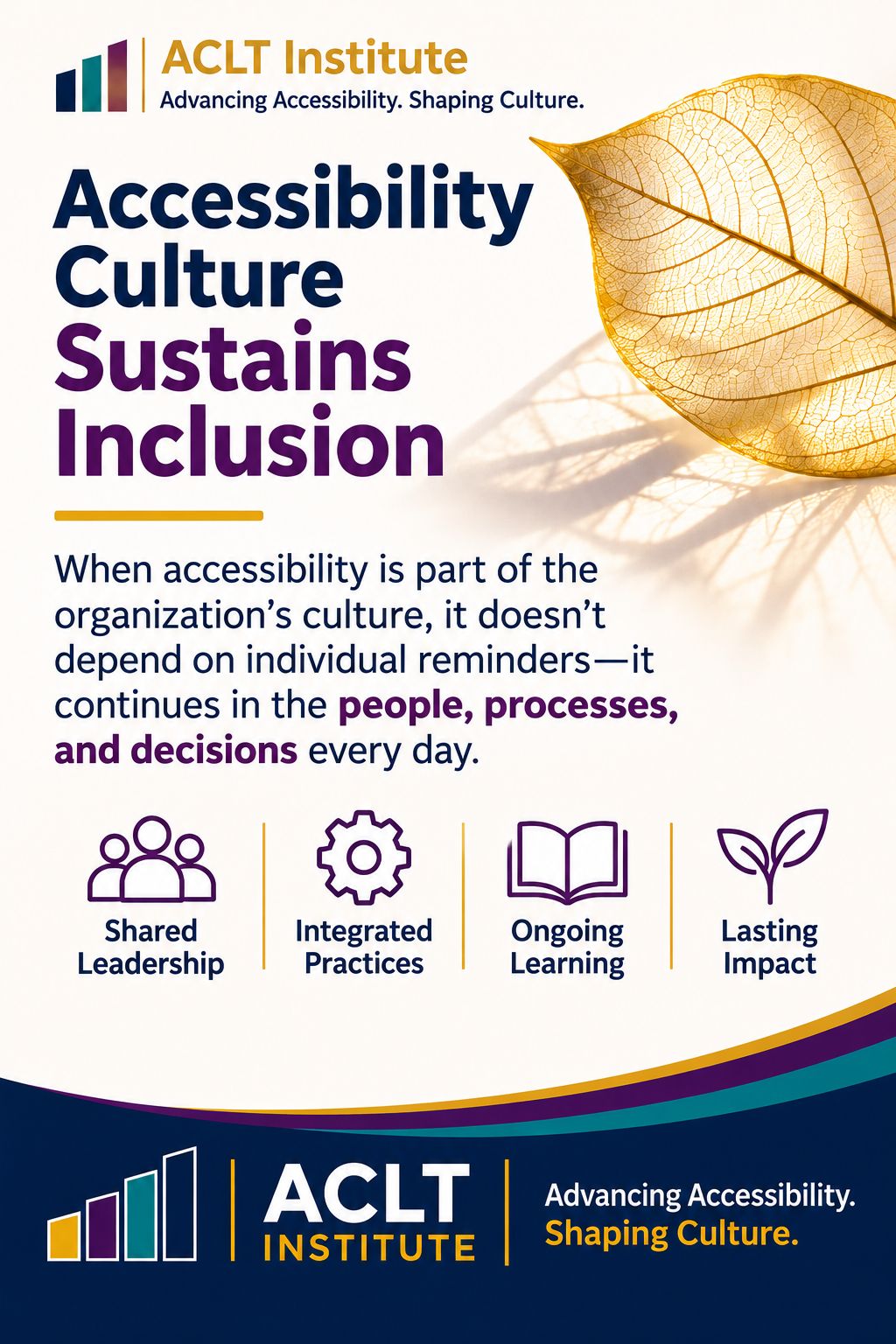
IF THE REMINDERS STOPPED, WOULD ACCESSIBILITY CONTINUE? It's a question worth asking.
Read full post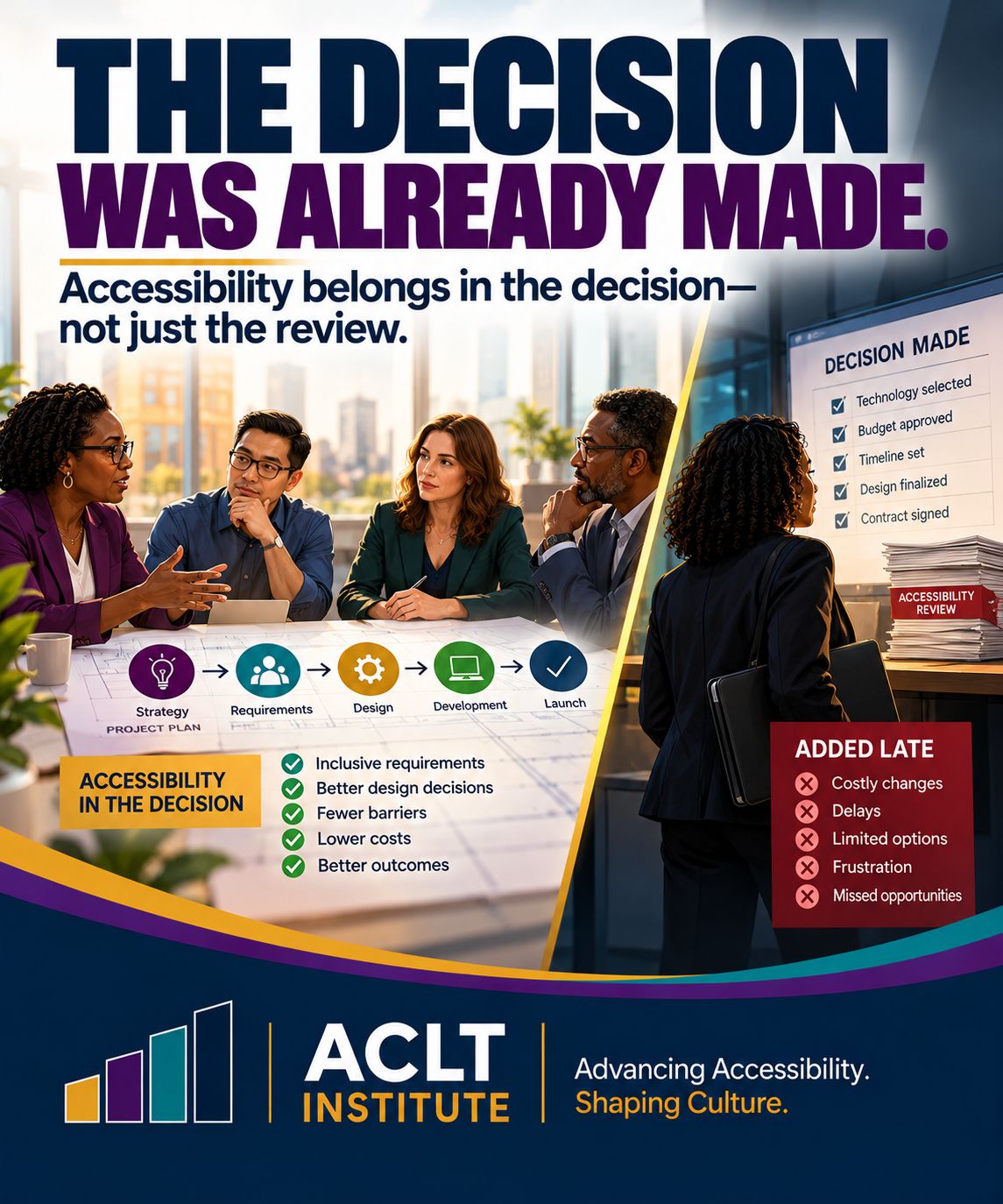
ACCESSIBILITY WASN'T OVERLOOKED. IT WAS INVITED TOO LATE. Consider how many organizational decisions shape accessibility long before anyone evaluates a product.
Read full post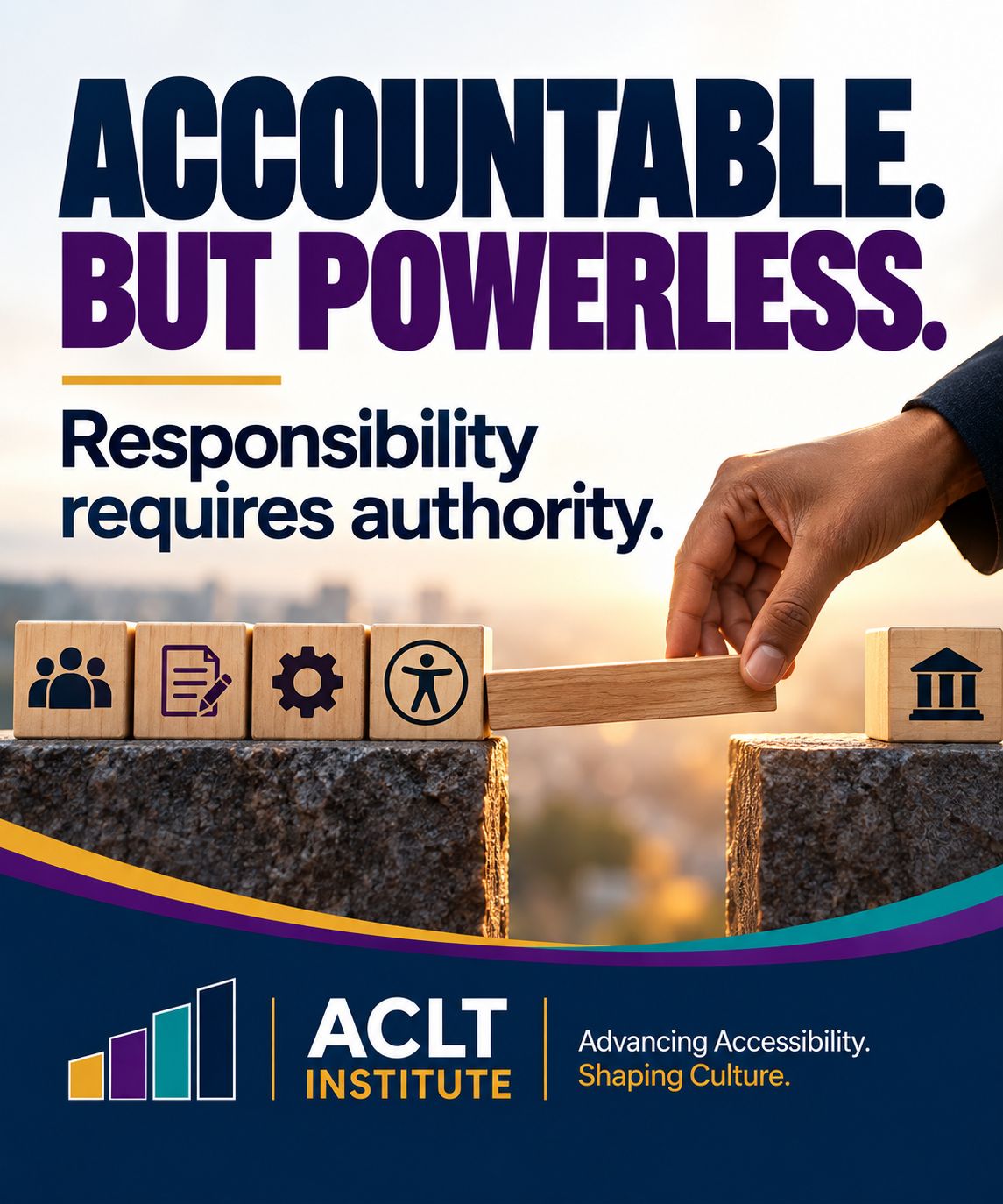
You gave them responsibility. Did you give them authority? Organizations are increasingly recognizing that accessibility cannot belong to one person or department.
Read full post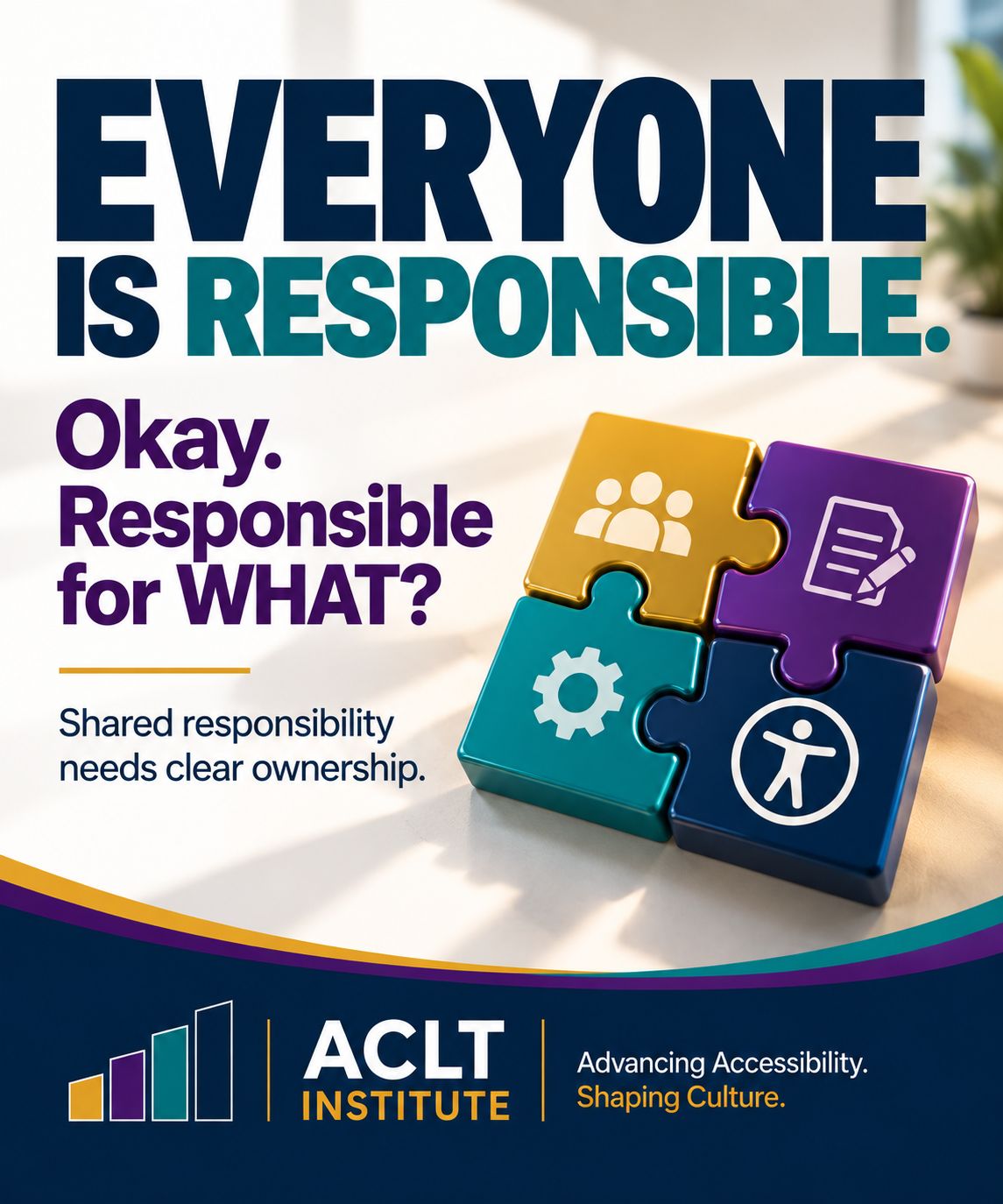
Accessibility is everyone’s responsibility. We say it all the time. And there’s truth in it. But there’s also a risk. When everyone is responsible—but no one knows exactly what they own—accessibility can still fall through the cracks.
Read full post
If your accessibility strategy has a hero, you may have a problem. You know the person.The one who catches the issue everyone else missed.Raises the accessibility question in every meeting.Knows exactly who to call.Follows up.Follows up again.And somehow keeps accessibility moving.
Read full post
Accessibility culture doesn’t happen by accident. Organizations can invest in standards, tools, training, and expertise—and all of those things matter.
Read full post
How do you measure something as complex as culture? Accessibility culture isn’t one policy, one score, or one accessibility team.
Read full post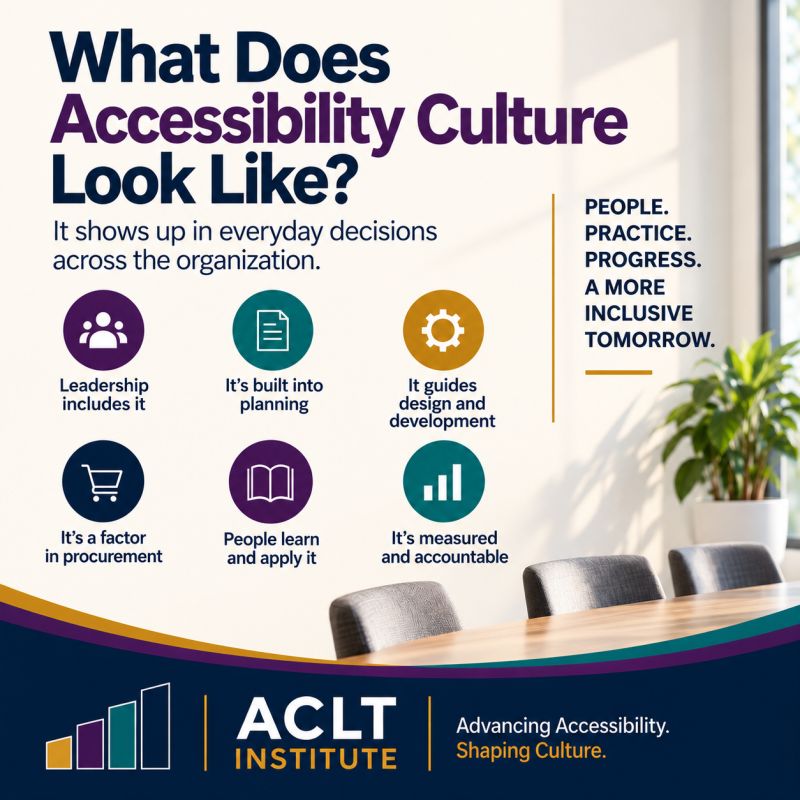
What does accessibility culture actually look like? It looks like accessibility showing up before someone asks for it.
Read full post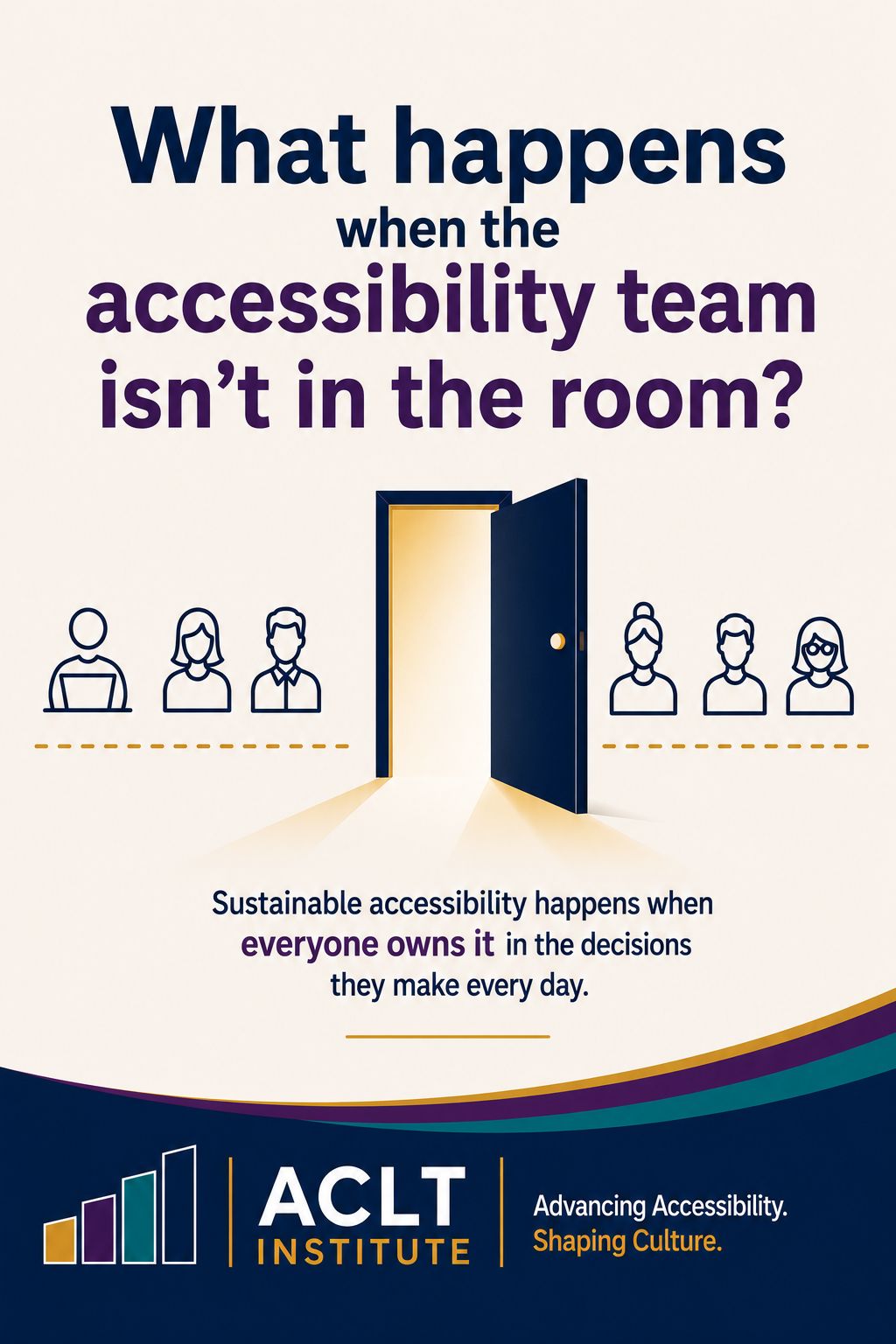
An accessibility program can be successful—and accessibility still may not be sustainable. Why?
Read full post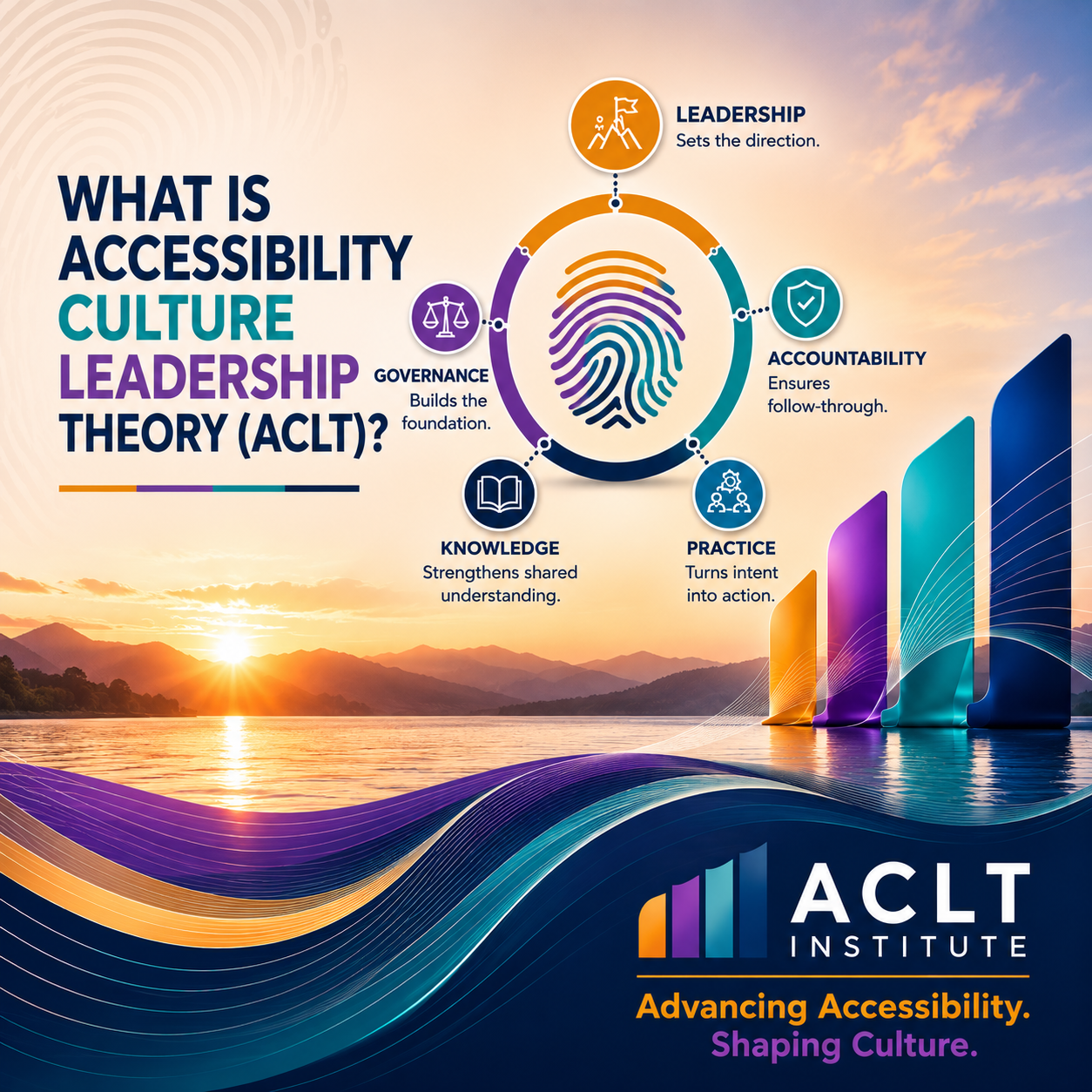
The ACLTi community
Connect with people working to make accessibility part of how organizations lead, make decisions, and deliver digital experiences.
Bring your questions, share what you’re learning, and explore practical ways to strengthen leadership, governance, and everyday accessibility practice.
Visit the ACLTi communitycommunity.acltinstitute.org
People. Work. Trust.
The effects of inaccessible digital experiences extend across an organization. The decisions behind those experiences are a practical place to begin.
A person cannot submit a form, read important information, or complete a service independently. Examine task completion, assistance requests, and reported barriers.
Employees repeat work, create workarounds, or wait for remediation. Look at time lost, rework, and recurring issues.
Barriers interrupt purchases, appointments, applications, and support. Review task success, abandonment, and accessibility-related support contacts.
Repeated unresolved barriers can undermine confidence. Review complaint themes, resolution time, and feedback from affected people.
Understand the organizational conditions behind recurring barriers. Clarify ownership and decision authority, strengthen practical capability, and test a focused change with evidence.
Establish a developmental baseline → · Explore a focused pilot →
Find your starting point
Reflect on six proposed ACLT organizational capabilities. Record the evidence behind your responses, see a developmental baseline, and choose one priority for improvement.
Developmental — not validated. This preliminary self-assessment supports planning and conversation. It does not establish a maturity level, certification, technical conformance, or legal compliance.
Assess Your Accessibility CultureChoose your field of inquiry
Start with a short culture self-evaluation
for your sector.
The research foundation
ACLT Institute connects an emerging leadership theory with practical questions about accessibility culture. Explore how leadership, governance, and organizational systems may support sustained accessibility alongside essential compliance work.
Bring your questions, your professional experience, and your willingness to rethink the familiar. Read a framework, try a planning tool, or use a discussion prompt to examine an everyday decision.
If you’re ready to make accessibility a core part of how your organization works, you belong here.
To advance sustainable digital accessibility by helping organizations cultivate the leadership, governance, and everyday practices that make accessibility part of their culture.
Through research, education, and practical resources, ACLT Institute connects inclusive values with organizational action so people, systems, and decisions support meaningful access.
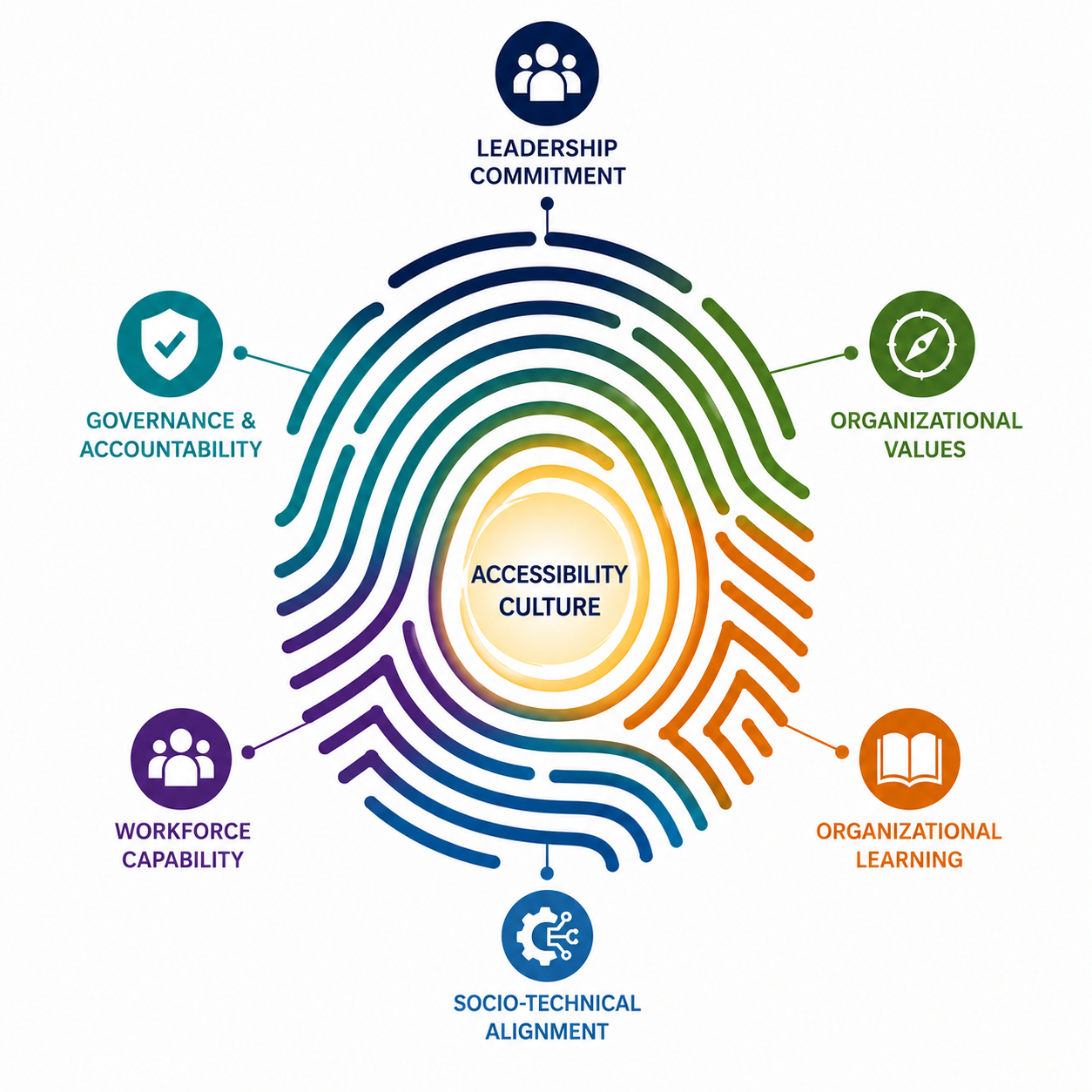
Accessibility Culture Leadership Theory explores how leaders cultivate the conditions that embed accessibility in organizational identity and everyday practice.
Its central proposition is that leaders intentionally cultivate the conditions that bring people, systems, and values together, making accessibility part of how an organization works.
ACLT complements technical standards, testing, and remediation by examining the organizational conditions that support their sustained use.
The theory is developing through research. These introductory resources support reflection; they are not a validated certification or assessment.
Explore Accessibility Culture Leadership Theory →
This version uses WCAG AA text contrast targets, visible keyboard focus, labelled controls, a skip link, responsive layouts, and native dialog and disclosure controls. Readable HTML versions are provided for Institute starter resources.
Use Tab to move between controls, Enter to follow links, Space to activate buttons, and Escape to close a resource reader. You can zoom and use your browser’s text settings. Testing supports the design but is not a formal WCAG conformance certification.
The reading room
Explore resources by purpose, then search or narrow the collection for your work. Browse all five categories.
Institute starter resources are drafts for review.
Try a broader search or return to the full collection.
Saved resources and planner notes stay in this browser. Downloads give you a portable copy. Public starter guides are available now. Membership registration will be announced separately.
Learn. Apply. Strengthen practice.
Explore the planned membership pathway that fits your work. Public resources and the developmental assessment are available now.
For a practitioner, educator, researcher, or leader developing their own accessibility culture practice.
For an organization coordinating accessibility leadership, governance, and practice across teams.
Membership registration and member-only access are not open yet. Paid plans are not active.
An ACLT Institute initiative
Superheroes of accessibility who bring empathy, inclusive technology, and the human impact of barriers into the conversation.