If the reminders stopped, would accessibility continue?
IF THE REMINDERS STOPPED, WOULD ACCESSIBILITY CONTINUE?
It's a question worth asking.
Many organizations have accessibility policies, training programs, testing tools, and dedicated professionals.
Yet accessibility still depends on someone remembering to ask the right questions.
Did we include accessibility in the requirements?
Was the vendor's accessibility conformance report reviewed?
Have we considered people who use assistive technology?
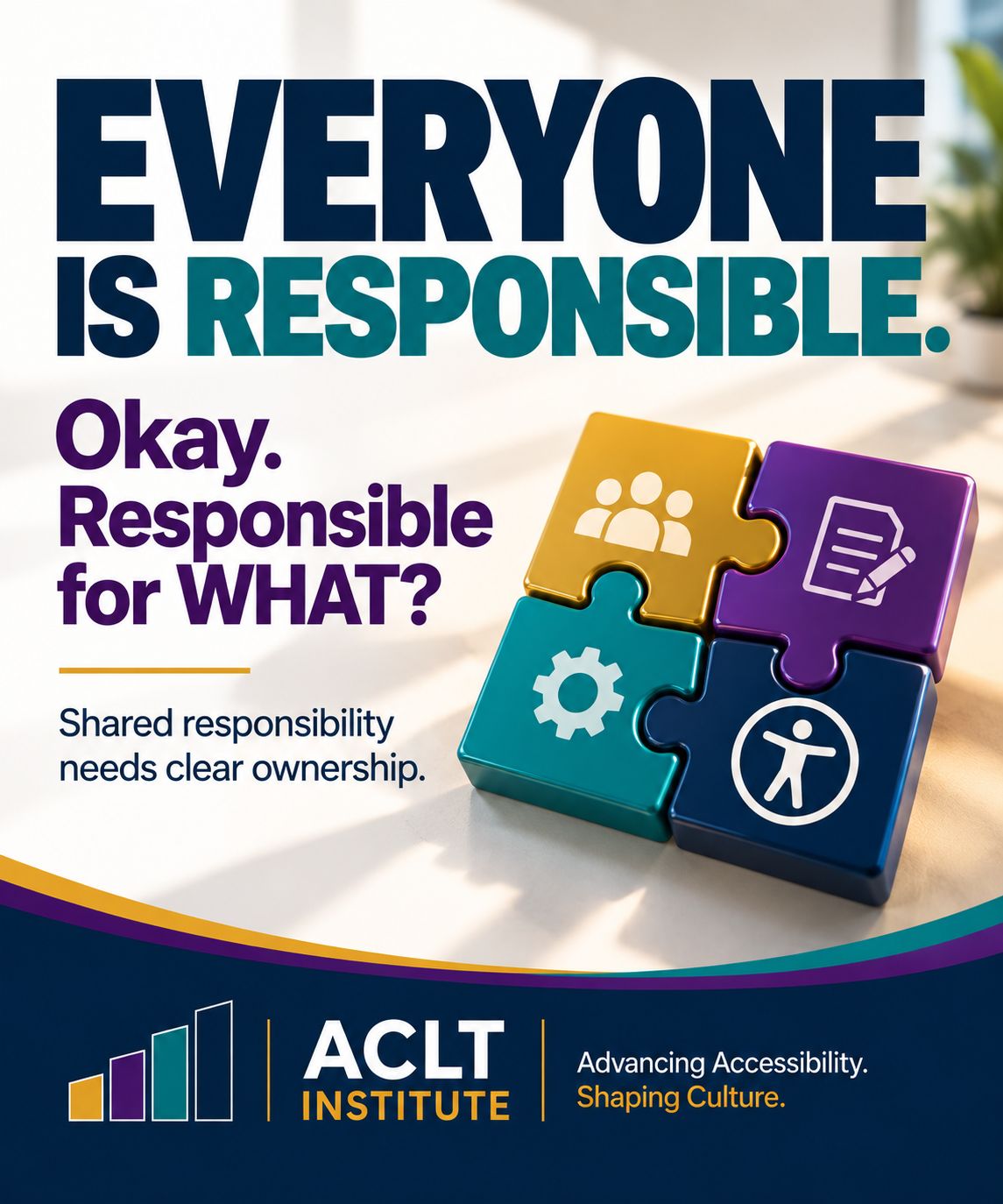
Who is responsible for addressing the barriers?
These are important questions.
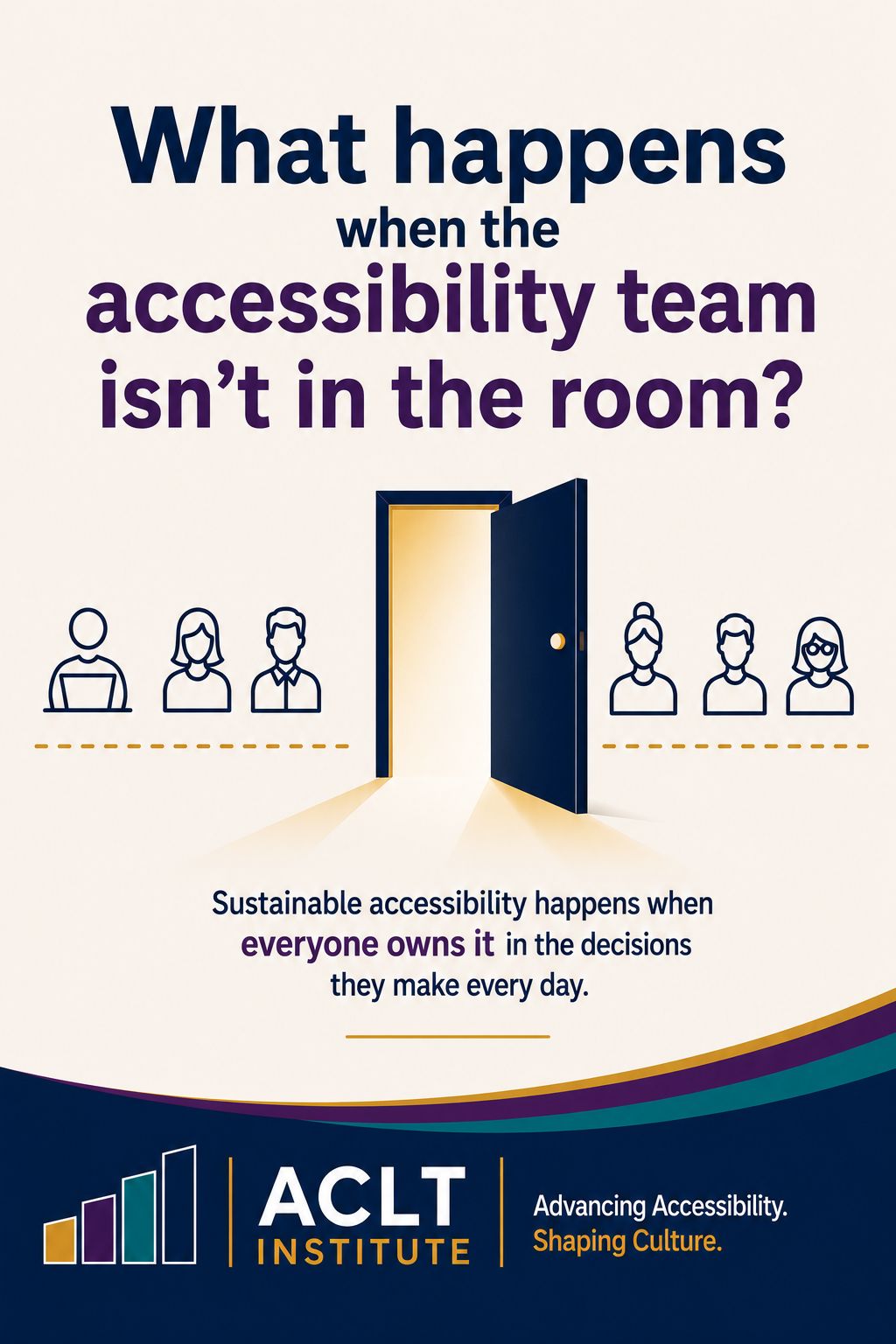
But consider what happens when the person asking them leaves the organization, changes roles, or simply isn't in the meeting.
Do the practices continue?
Or does accessibility quietly disappear from the conversation?
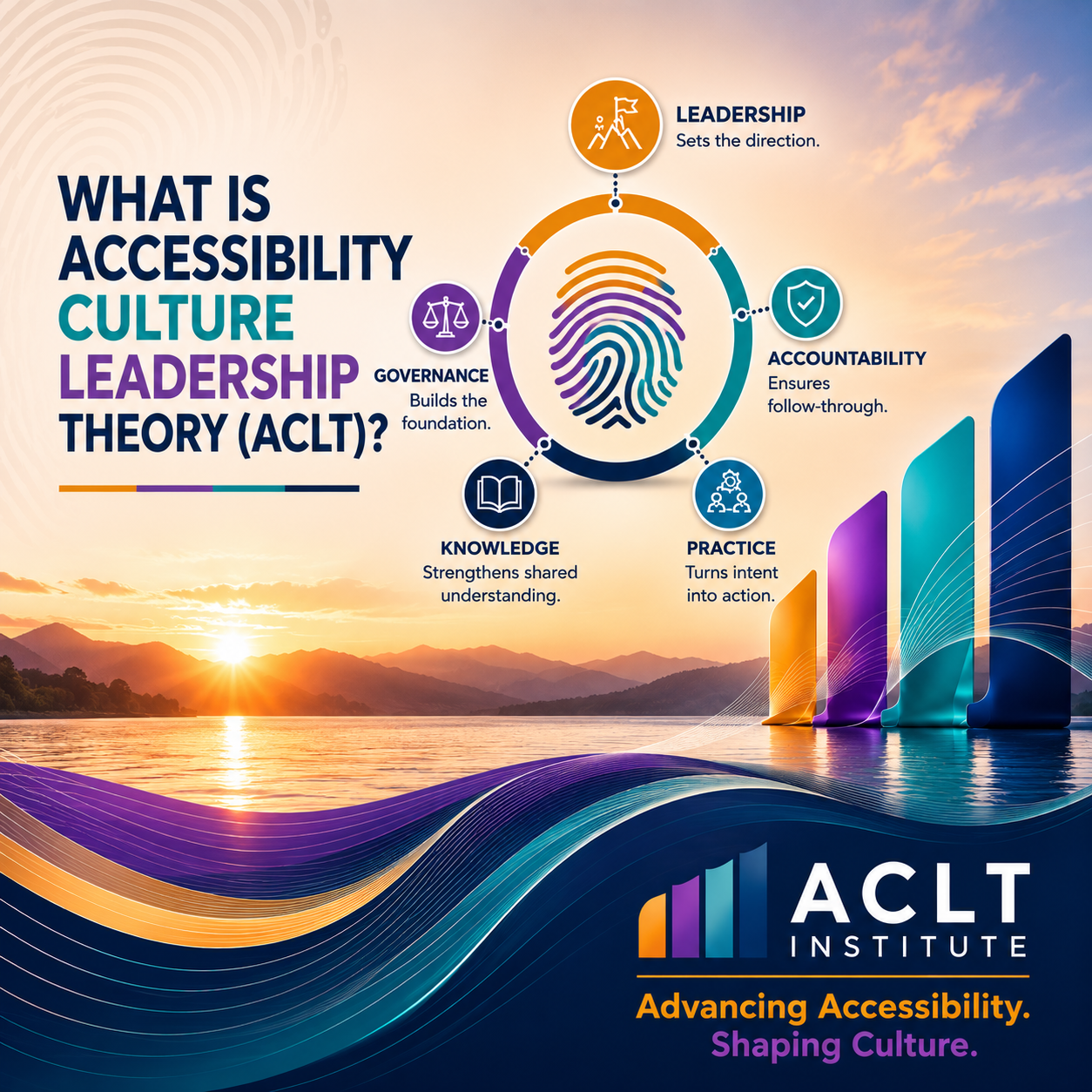
This distinction is central to the work we're developing through Accessibility Culture Leadership Theory (ACLT).
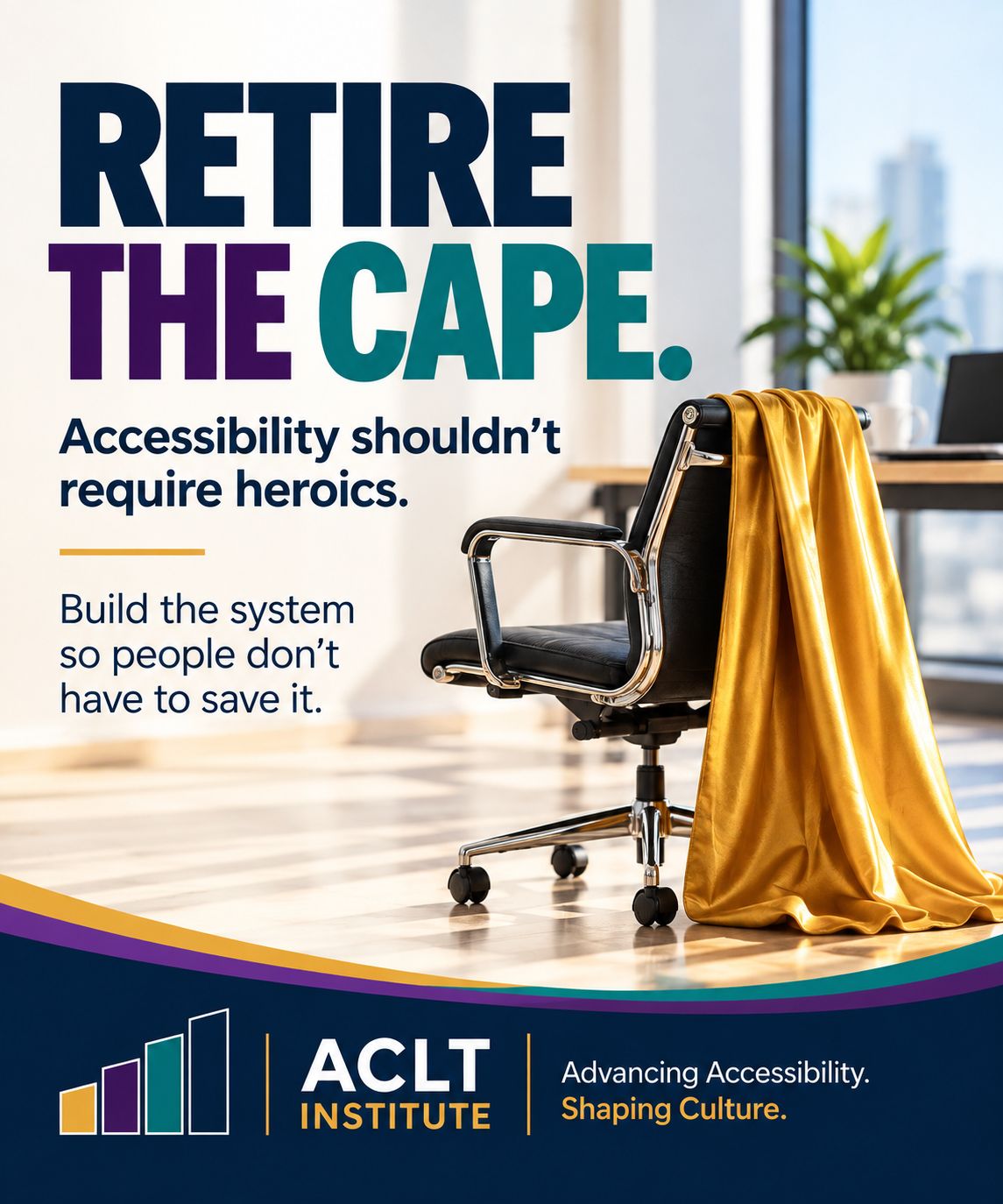
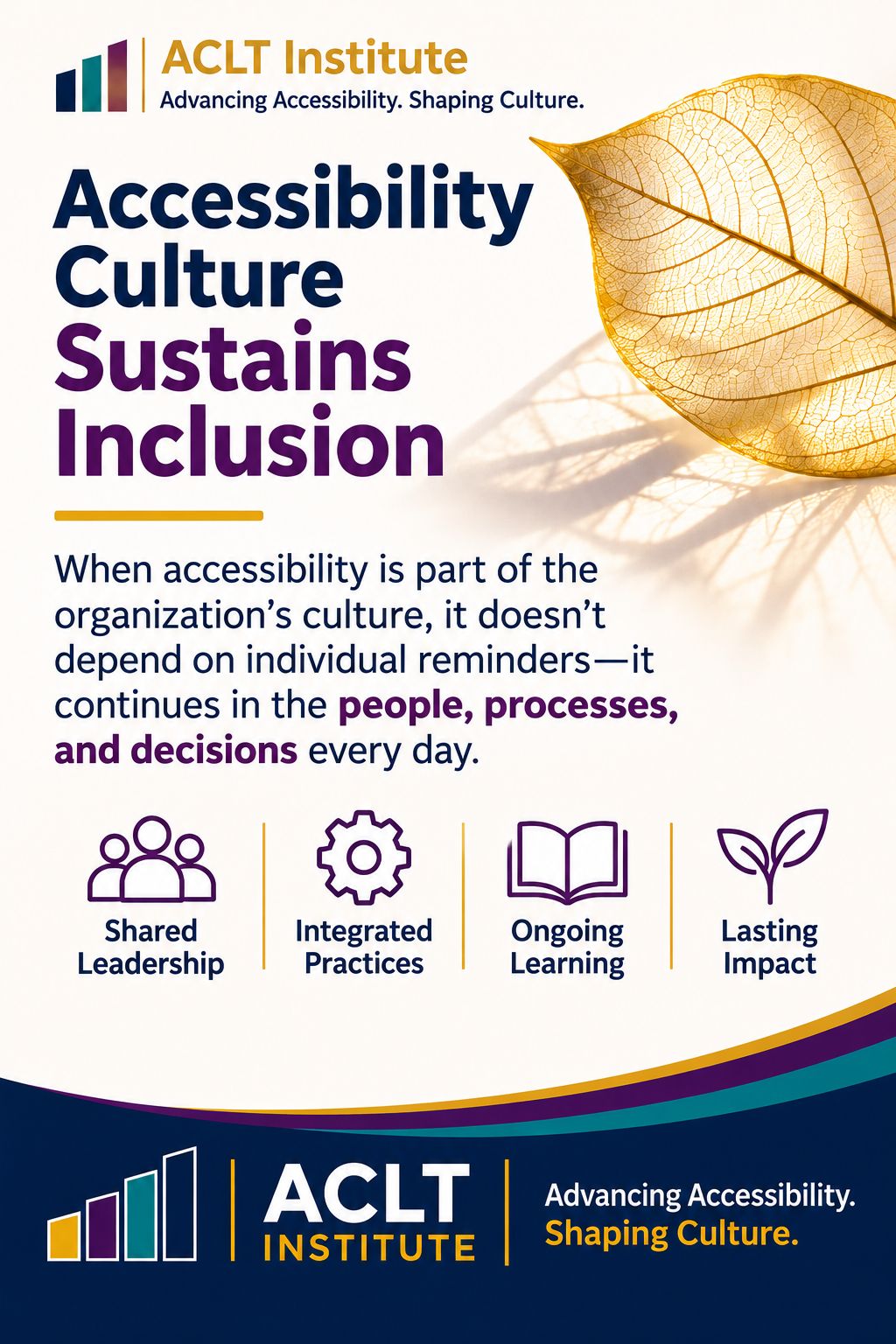
Sustainable accessibility cannot depend on individual vigilance.
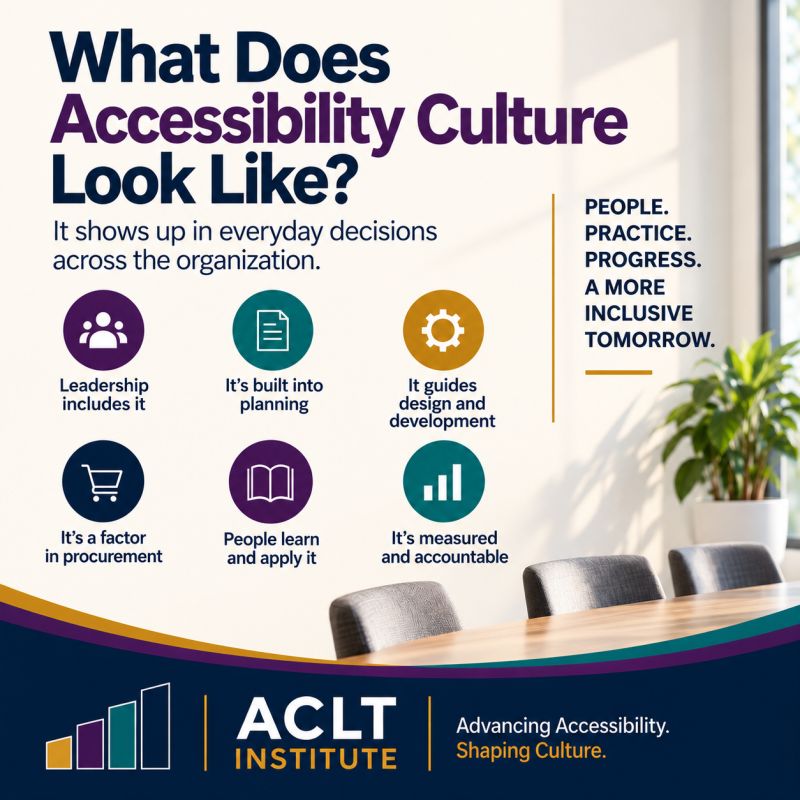
It requires organizational conditions that support consistent practice:
• Leadership that establishes clear expectations.
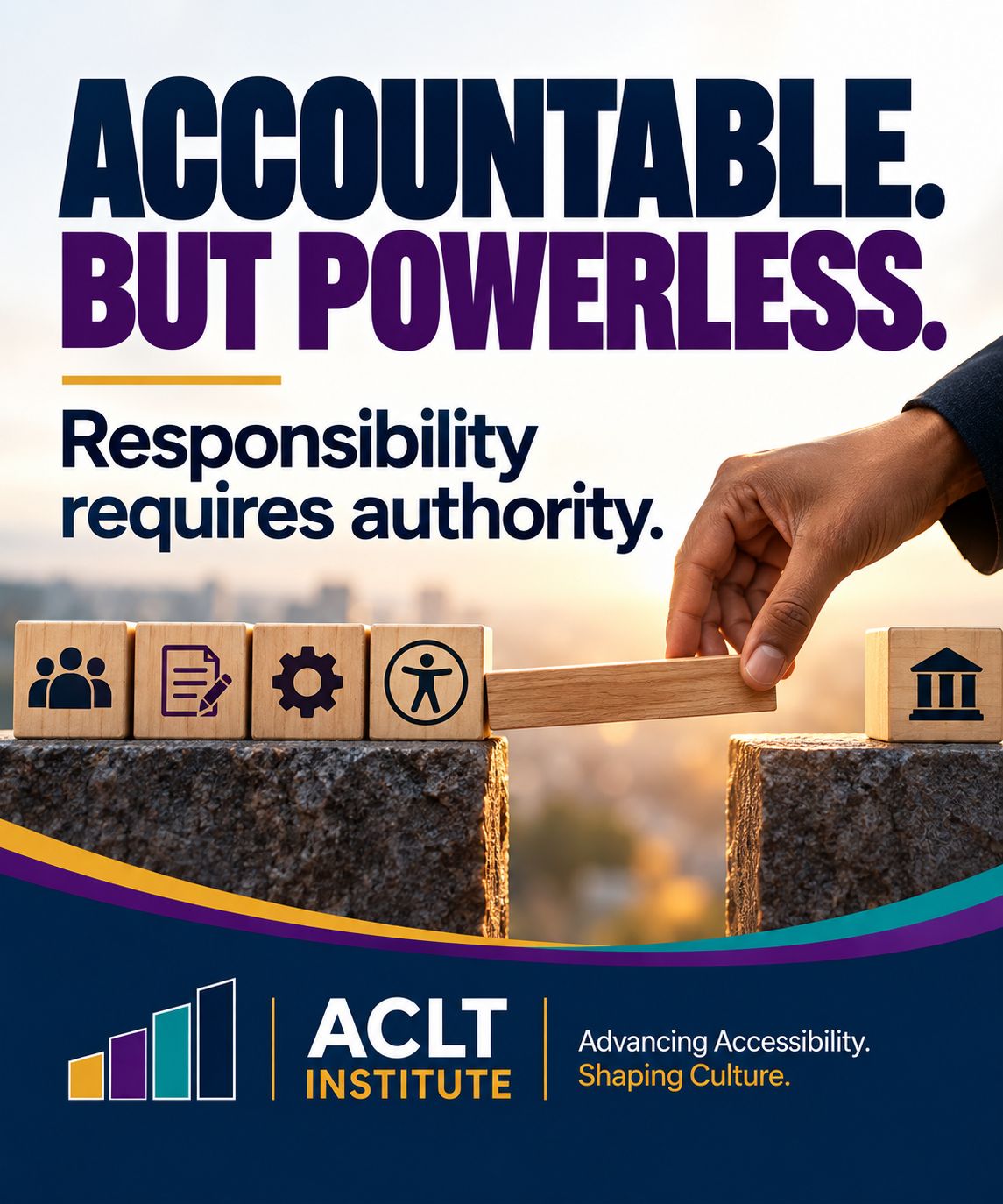
• Governance that defines authority and accountability.
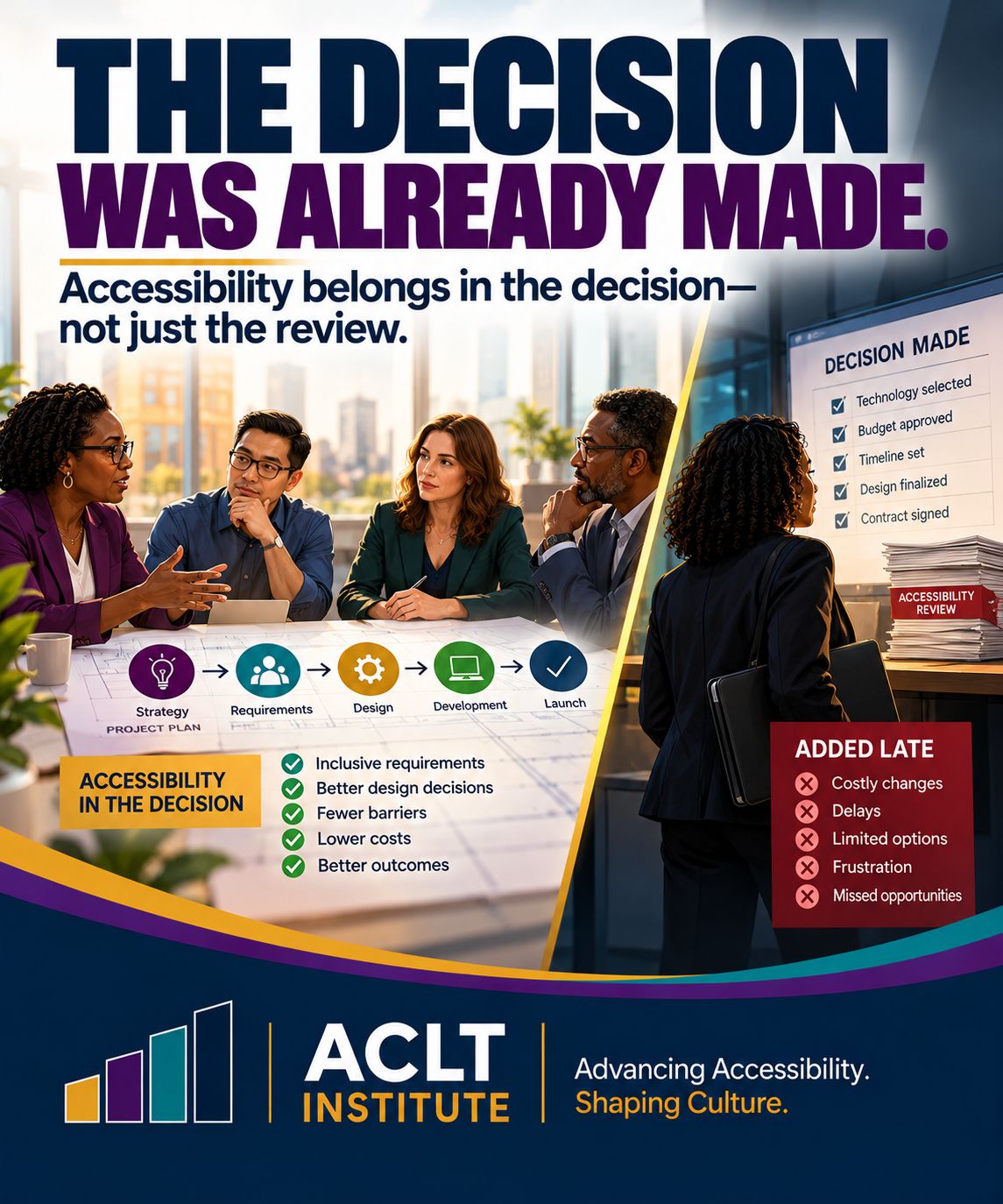
• Workflows that integrate accessibility into everyday decisions.
• Learning environments that develop organizational capability.
• Shared values that reinforce inclusion.
At ACLT Institute, we're exploring how these conditions can be understood, cultivated, and assessed.
Because accessibility culture isn't demonstrated by how often an organization talks about accessibility.
It's demonstrated by what the organization continues to do when no one is reminding it.
The question for leaders:
If your accessibility champion left tomorrow, what would remain?
ACLT Institute
Advancing Accessibility. Shaping Culture.
acltinstitute.org
#ACLTInstitute #AccessibilityCulture #AccessibilityLeadership #AccessibilityGovernance #DigitalAccessibility