Leadership Commitment
Leaders consistently prioritize accessibility through direction, resources, communication, and their own decisions.
ACLT Institute
How does accessibility become part of how an organization works?
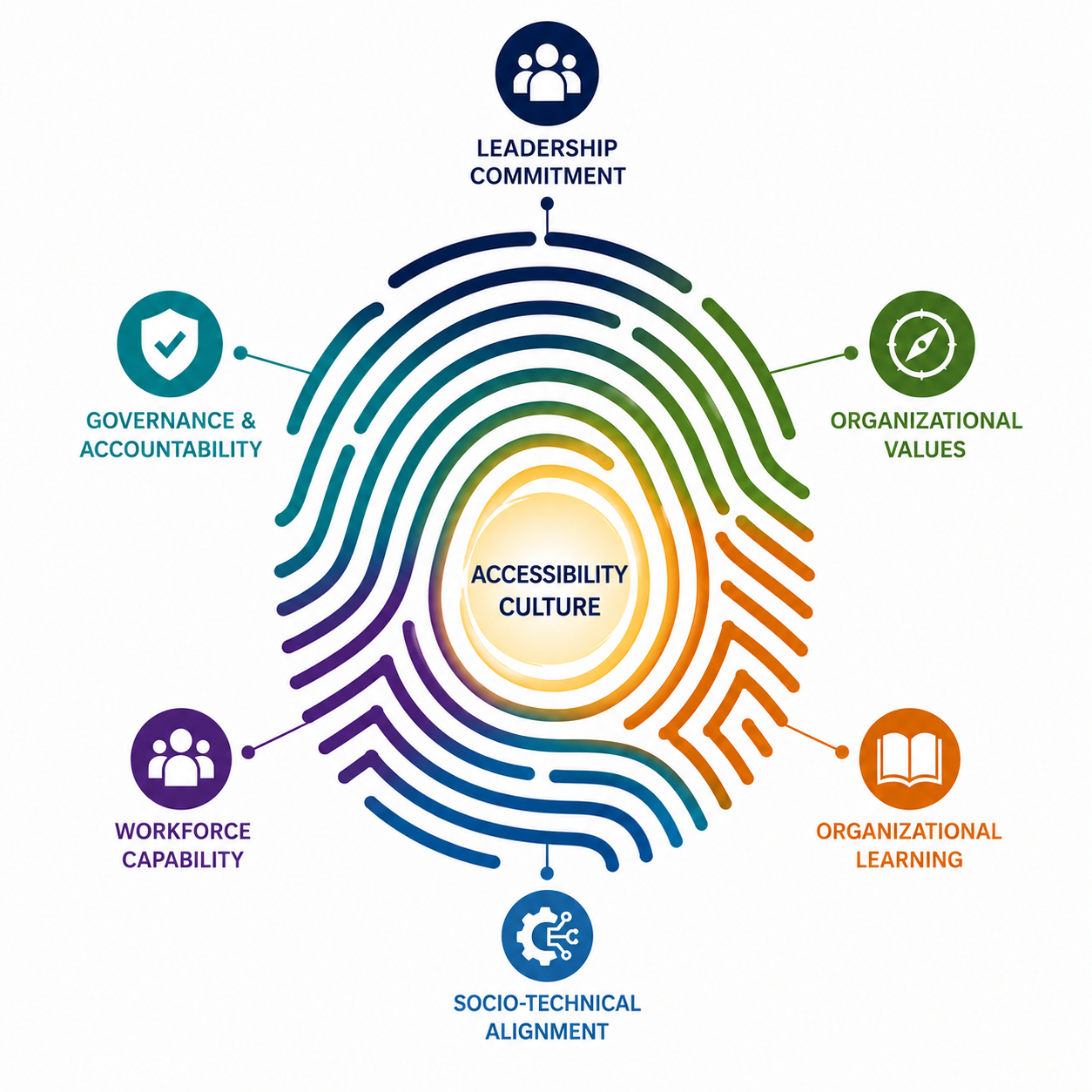
Accessibility Culture Leadership Theory explores how leaders cultivate the conditions that embed accessibility in organizational identity and everyday practice.
Its central proposition is that leaders intentionally cultivate the conditions that bring people, systems, and values together, making accessibility part of how an organization works.
ACLT complements technical standards, testing, and remediation by examining the organizational conditions that support their sustained use.
The theory is developing through research. These introductory resources support reflection; they are not a validated certification or assessment.
Explore your sector’s guidance, use a leadership discussion prompt, or examine a recurring decision that affects access.
Lead the accessibility conversation →
ACLT proposes that accessibility culture emerges through the interaction and reinforcement of these capabilities. The theory and this preliminary assessment are developing; the indicators are not a validated scale.
Leaders consistently prioritize accessibility through direction, resources, communication, and their own decisions.
Structures, decision rights, policies, and oversight turn intentions into repeatable responsibilities.
Shared beliefs and professional norms make accessibility part of what people expect from good work.
Knowledge, practical skills, collaboration, and support distribute accessibility capability across roles.
Education, mentoring, feedback, reflection, and shared problem solving refine practice over time.
Governance, technology, tools, workflows, and collaboration support accessibility throughout digital delivery.
Explore the developmental Accessibility Culture Assessment →